The Weirdest and Most Exciting Soft Serves in Kansai


The Weirdest and Most Exciting Soft Serves in Kansai
Soft serve is a road-trip institution in Japan, and the best place to find it is a michi-no-eki, the roadside stations that double as farm markets. Each one leans on whatever its area grows, which is how you end up with soft serves flavored with onion, black soybean, plum or persimmon instead of plain vanilla. Kansai, with its farms, tea hills and fruit country, has some of the strangest and best.
This guide rounds up the most interesting soft serves across Kansai, from a fig soft serve in the hills of Shiga to a Japanese-pepper soft serve in the Tajima hills. Almost all are at michi-no-eki you can pull straight off the road, so they pair naturally with a drive. Flavors, prices and especially seasonal items change, so treat the details as a guide and check before a special trip.
At a Glance
- Miyama no Sato: ¥300 Ryuou miso gelato
- Michi-no-Eki Konze no Sato Ritto (Shiga): fig / ichijiku soft serve
- Michi-no-Eki Yoka Tajimagura (Hyogo, Tajima): Asakura sansho / Japanese-pepper soft serve
- Michi-no-Eki Kyotamba Ajimu-no-Sato (Kyoto): Tamba black-soybean soft serve
- Kyozuan, Arashiyama (Kyoto): tofu soft serve the shop says will not fall out upside-down
- Michi-no-Eki Minabe Ume Shinkokan (Wakayama): ume / plum soft serve
- Michi-no-Eki Kaki-no-Sato Kudoyama (Wakayama): persimmon soft serve
- Michi-no-Eki Okukawachi Kuromaro-no-Sato (Osaka): summer peach-dice soft serve
- Michi-no-Eki Yoshinoji Oyodo i-Center (Nara): roasted-bancha and sencha tea soft serve
- Michi-no-Eki Ise-Shima (Mie): Ise-tea soft serve
Miso gelato: Miyama no Sato (Ibaraki, Osaka)
Miyama no Sato (見山の郷) is a farm produce market in Ibaraki City, Osaka. We stopped for its Ryuou miso (龍王味噌, Dragon King miso) gelato. A single scoop was ¥300 when we visited; the official menu lists the same price.
It tastes like caramel at first, then leaves a pleasant miso aftertaste. We really liked it, especially for ¥300. It is scooped gelato, so a small detour from the soft serves in this guide.
It gets busy on weekends, and arriving late can mean struggling to find a parking space. There are two parking areas, one in front of the market and a second a little farther away. Arrive early and follow the signs or staff directions when the front lot is full.
Miyama no Sato venue and access · Official gelato menu
Gelato flavors vary, so check the counter for Ryuou miso on the day.
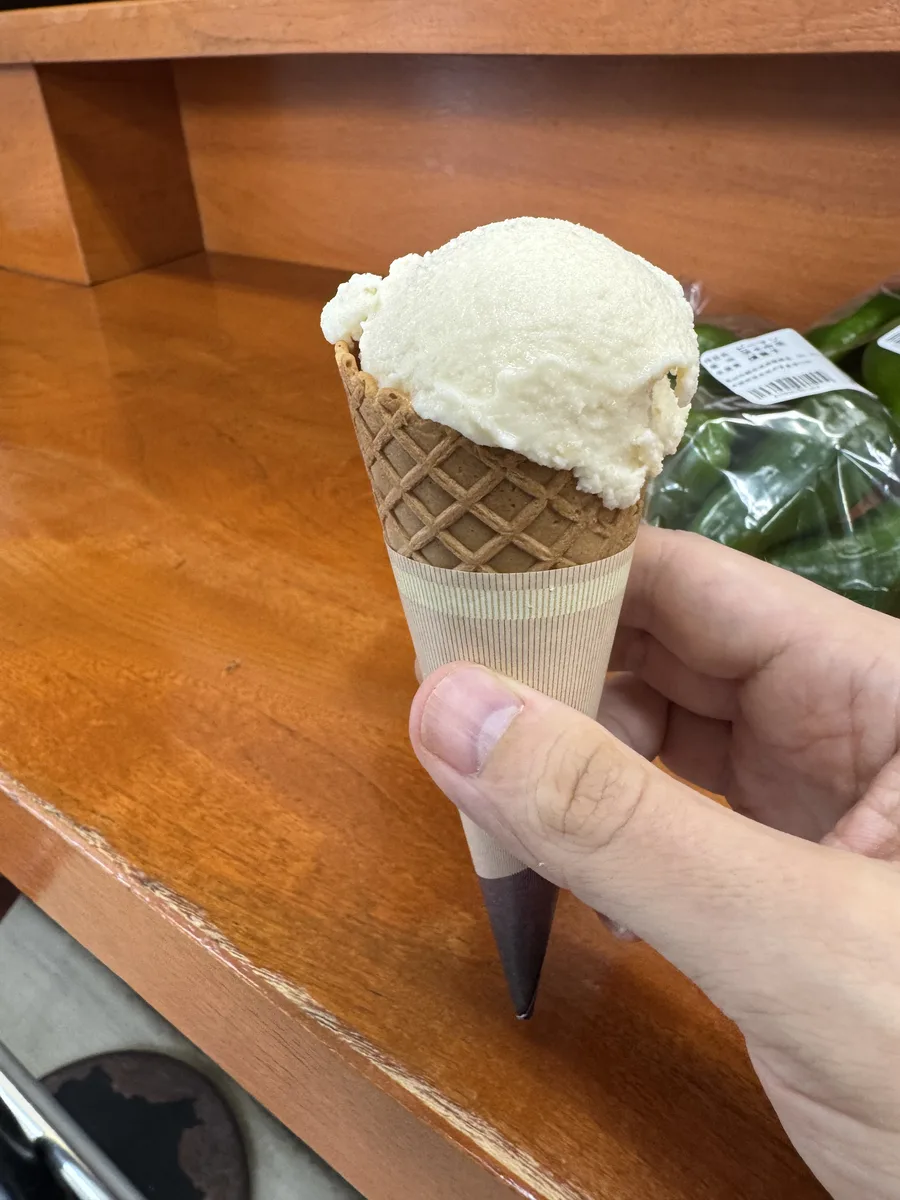
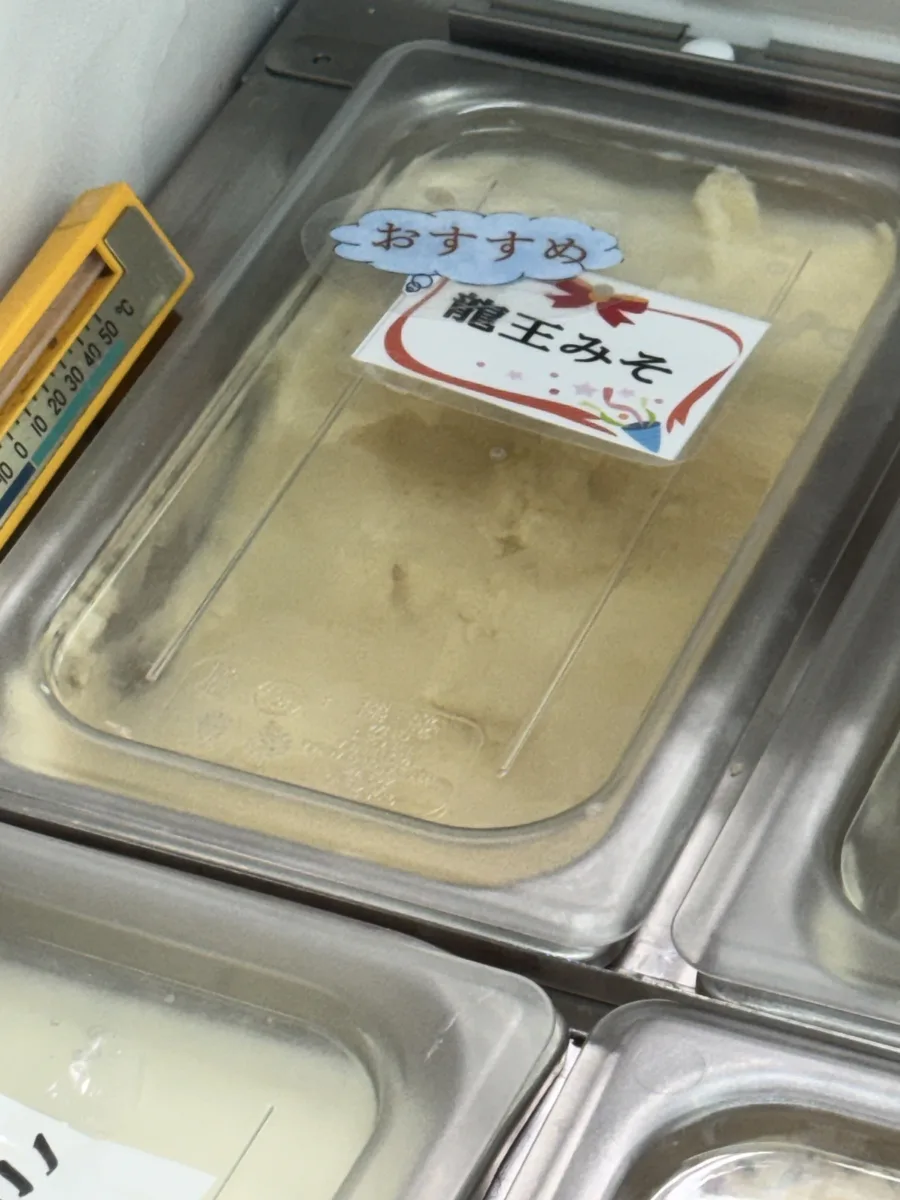
Fig: Michi-no-Eki Konze no Sato Ritto (Shiga)
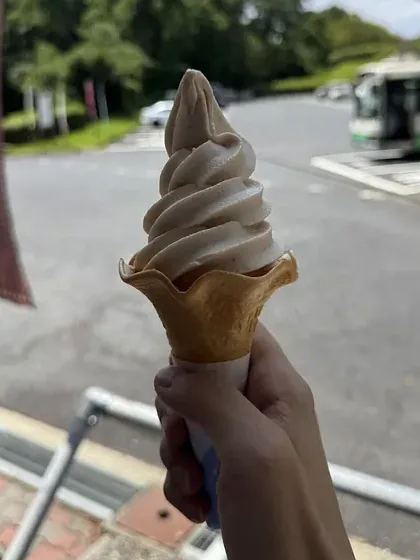
In the Konze hills of Ritto, this roadside station makes a fig (ichijiku) soft serve from local Ritto figs, about 400 yen, or 350 for plain vanilla. It is a gentle, jammy flavor, and the station is also the gateway to the Konze Alps hiking trails and known for its wild-boar shishi-don.
Michi-no-Eki Konze no Sato Ritto
Japanese pepper: Michi-no-Eki Yoka Tajimagura (Hyogo, Tajima)
Up in the Tajima hills of Yabu, on National Route 9, this roadside station makes a soft serve from Asakura sansho, the large, fragrant local variety of Japanese pepper grown around Yoka. The sansho gives it a citrusy, gently numbing tingle over vanilla, finished with crunchy chocolate flakes. The restaurant also does Tajima beef, and the station sits right on the road up to Takeda Castle, so it is an easy stop on a drive through northern Hyogo.
Black soybean: Michi-no-Eki Kyotamba Ajimu-no-Sato (Kyoto)
Out in the Tamba hills, this expressway roadside station serves a soft serve made with Tamba kuromame, the region's premium black soybeans, flecked with real beans for a subtly nutty, lightly sweet flavor. Look for it at the food-court counters on the expressway side.
Michi-no-Eki Kyotamba Ajimu-no-Sato
Tofu: Kyozuan, Arashiyama (Kyoto)
At the start of the path to the Arashiyama bamboo grove, Kyozuan makes its soft serve with silken tofu and soy milk from Japanese soybeans. The shop's own sign says it will not fall out even if you turn the cone upside-down; it is noticeably denser than ordinary soft serve, but eat it before it melts. Plain is 500 yen and black-sesame kinako, this shop's recommendation, is 580. The green matcha version in some photos is sold only at Kyozuan's Fushimi Inari shop. It contains milk, so it is not vegan, and there are no seats: it is a takeaway snack a short walk from Tenryu-ji.
Plum: Michi-no-Eki Minabe Ume Shinkokan (Wakayama)
Minabe is Japan's number-one plum town, home of the prized Nanko-ume, and its plum-promotion hall serves an ume soft serve, about 250 yen year-round, with plum puree and fruit pieces for a bright, refreshing tang. Come in late winter and the hills around it are white with plum blossom.
Michi-no-Eki Minabe Ume Shinkokan
Persimmon: Michi-no-Eki Kaki-no-Sato Kudoyama (Wakayama)
At the foot of Mt. Koya, the persimmon-village station purees Kudoyama's Fuyu persimmon into a soft serve, about 440 yen, sorbet-like with a gentle kaki aroma. Wakayama is Japan's top persimmon prefecture, and this is its namesake cone.
Michi-no-Eki Kaki-no-Sato Kudoyama
Peach: Michi-no-Eki Okukawachi Kuromaro-no-Sato (Osaka)
In the Okukawachi hills of southern Osaka, this station piles diced local peaches on a peach soft serve for a summer treat, around 450 yen, usually from late May. Out of peach season it becomes a strawberry-dice version. Easy parking and a farm market make it a simple stop.
Michi-no-Eki Okukawachi Kuromaro-no-Sato
Tea: Michi-no-Eki Yoshinoji Oyodo i-Center (Nara)
On the road to Yoshino's cherry blossoms, the restaurant at this station serves two tea soft serves, a roasted bancha and a first-flush sencha, about 450 yen each, made with Oyodo's local sun-dried tea. A good stop before or after the Yoshino mountains.
Michi-no-Eki Yoshinoji Oyodo i-Center
Ise tea: Michi-no-Eki Ise-Shima (Mie)
Near the center of Ise-Shima National Park, this station serves an Ise-tea soft serve, a green-tea cone made with Mie's flagship Ise-cha, plus a local pearl-salt version. The products hall overlooks Matoya Bay and stocks the area's seafood.
Before You Go
Soft-serve flavors, prices and opening hours change, and seasonal items like the Osaka peach come and go. Most of these spots are michi-no-eki with car parking and little or no train access, so a car is the easiest way to string a few together. Check each station's site for current flavors before a special trip.
There are many more roadside stations to try than the ones on this page. Browse every michi-no-eki on Japan Voyage before you plan a drive. If you want a plain milk soft serve rather than a strange one, Michi-no-Eki Miyama Fureai Hiroba in Nantan, Kyoto, makes it with Miyama milk, and its gelato case changes with the season. It is a different place from Miyama no Sato at the top of this page.
FAQ
What is a michi-no-eki?
A michi-no-eki is a roadside station: a rest stop with parking, toilets, a farm-produce market and usually food. They sell local specialties, which is why their soft serves take on flavors like onion, plum or black soybean.
Which is the weirdest soft serve here?
The Japanese-pepper (Asakura sansho) soft serve at Michi-no-Eki Yoka Tajimagura is the boldest, a citrusy, tongue-tingling kick over vanilla. The tofu soft serve at Kyozuan is the best party trick: the shop's sign says it stays put when the cone is flipped over.
Do I need a car?
For most of these, yes. They are roadside stations built for drivers, with limited or no train access. Kyozuan in Arashiyama is the exception, about five minutes' walk from Randen Arashiyama Station.
In this guide
 Michi-no-Eki Konze no Sato Ritto
Michi-no-Eki Yoka Tajimagura
Michi-no-Eki Kyotamba Ajimu-no-Sato
Kyozuan Arashiyama
Michi-no-Eki Minabe Ume Shinkokan
Michi-no-Eki Kaki-no-Sato Kudoyama
Michi-no-Eki Okukawachi Kuromaro-no-Sato
Michi-no-Eki Yoshinoji Oyodo i-Center
Michi-no-Eki Ise-Shima
 Miyama no Sato
Michi-no-Eki Miyama Fureai Hiroba